
What our fire test results revealed, and the questions that followed about off-gassing, fire safety, and thermal performance.
Since we published the results of our certified fire resistance test for a rammed earth tyre wall assembly, a number of questions have surfaced. These extend beyond fire safety to off-gassing, thermal behaviour, material choice, and long-term performance.
These questions show that material choices are never abstract, they shape durability, performance, and how buildings work in practice. They demand a resource‑conscious design approach, with context guiding decisions as much as technical criteria.
In no particular order of importance, here is where we stand.
Hasn’t this been done before? What’s actually new here?
Yes, tyre-wall construction has a long history. The technique was systematised and popularised by Michael Reynolds, who began developing what he called Earthships in New Mexico in the early 1970s. The core principle of ramming earth into end-of-life tyres to create a dense thermal mass wall has since been applied in buildings around the world, including schools in Guatemala, community centres in Malawi, and homes in Europe and South Africa. This work sits within that established tradition.
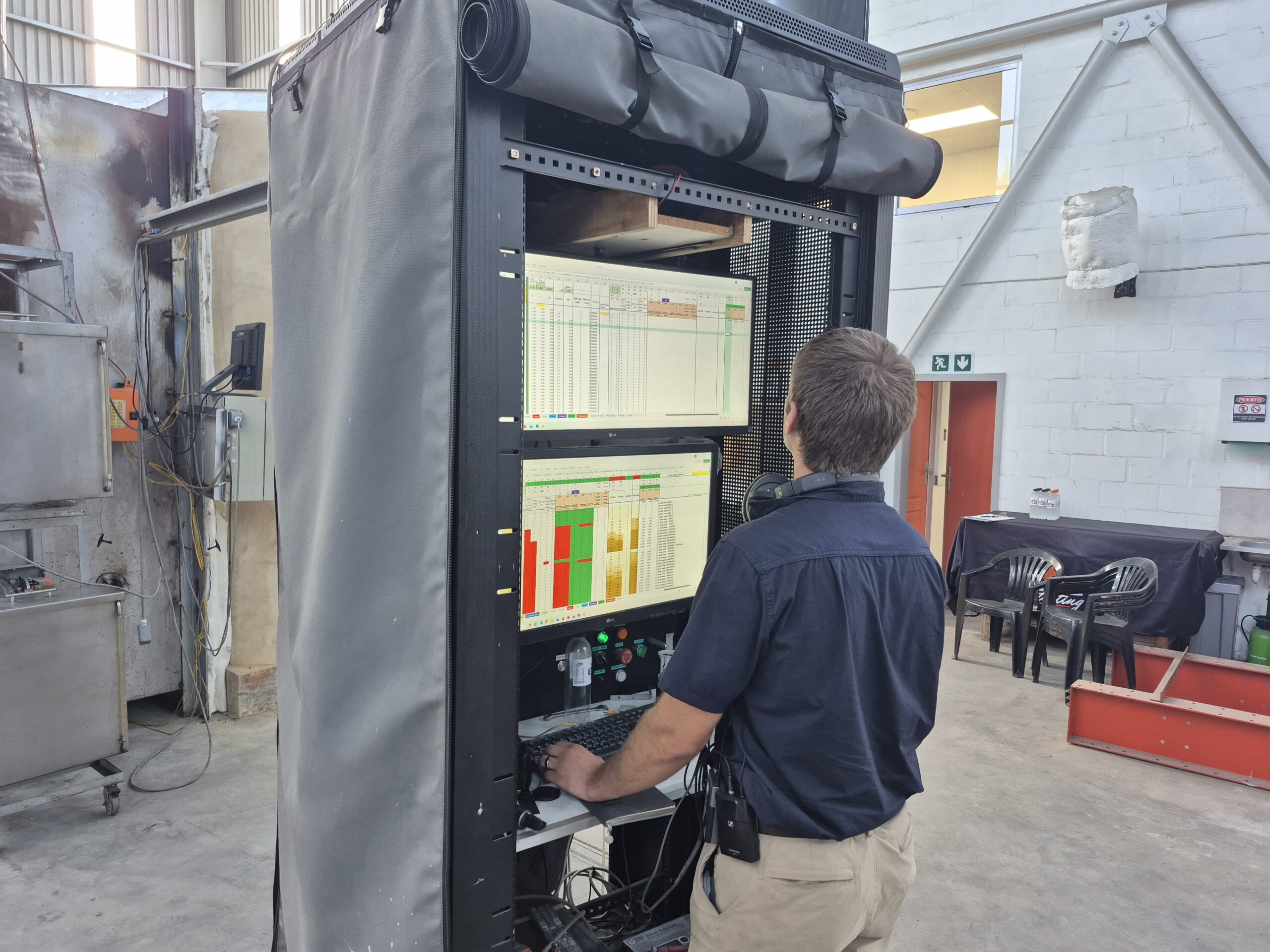
What’s new is: rammed-earth tyre wall assembly has now received a certified laboratory fire resistance rating, tested under EN 1363-1 and EN 1364-1, European standards recognised across South Africa, the UK, and many other jurisdictions. The resulting rating of 120 minutes has not previously existed for this construction type. Until now, approvals for tyre-wall buildings have relied on engineering equivalence arguments, professional sign-off, or the long empirical track record of Earthship projects. No standardised laboratory result for the full wall assembly has been available, until now.
The test was undertaken in support of the Heideveld Edu-Hub, a multi-classroom Montessori early childhood development centre in Cape Town serving an underserved community. To proceed through formal planning processes, and to demonstrate that this construction approach can be used in regulated, public-facing buildings, a result that could be evaluated on paper as well as in practice was required. This test forms part of that process.
Aren’t tyres toxic? What about off-gassing?
This is the question that generated the most debate, and the short answer is that the evidence accumulated over decades of Earthship construction does not support the concern, and the chemistry explains why.
Tyres off-gas when exposed to heat, ultraviolet radiation and oxygen, the conditions that drive the breakdown of rubber. Once a tyre is compacted with earth and encased behind cob and lime plaster, these exposures are largely absent. Once sealed in an oxygen‑limited, UV‑free, thermally stable environment, the tyre no longer off‑gasses.
There is also a timing aspect. Much of a tyre’s volatile content is released during its service life under the heat and friction of road use. Car tyres typically travel between 40,000 and 80,000 km before being discarded [1], by which stage a substantial portion of this release has already occurred. The tyres used in construction are end-of-life tyres.
Available testing aligns with this understanding. A 1995 study by the University of Wisconsin-Madison, Use of Scrap Tires in Civil and Environmental Construction, concluded that “the potential leaching of toxic pollutants from scrap tires is minimal” [2]. The findings were circulated by the New Mexico Environment Department, with key excerpts, including discussion of off-gassing, later reproduced by Earthship Biotecture [3].
One point raised in discussion is that lime and cob plasters are vapour-permeable and do not act as vapour barriers. This is technically correct. However, in the absence of the heat, UV radiation and oxygen that drive off-gassing, there is little active emission to contain. The wall isn’t suppressing active off-gassing, it’s preventing the conditions that would cause it.
Tyres aren’t a natural material. Why not use rammed earth, strawbale, or another natural alternative instead?
This question depends heavily on location, available resources and intended use; and it’s important to note that we use natural materials in conjunction with tyres.
Natural building methods are most appropriate where suitable materials are available in abundance, and when they can be sourced directly from the site. Access to clay-rich subsoil influences the suitability of systems such as rammed earth or cob.
The conditions in Heideveld, on the Cape Flats, are different. The local soil is beach sand, with limited binding or structural capacity, and it’s not suitable for rammed earth, cob, or most earthen wall systems without significant amendment.
Material choice also has broader resource implications. Earth is not an unlimited resource, and in many countries building sand is already being imported. Even widely used natural materials have associated extraction, transport, and processing costs. Designing with resource constraints in mind requires an assessment of what is locally available and the impact of its use.
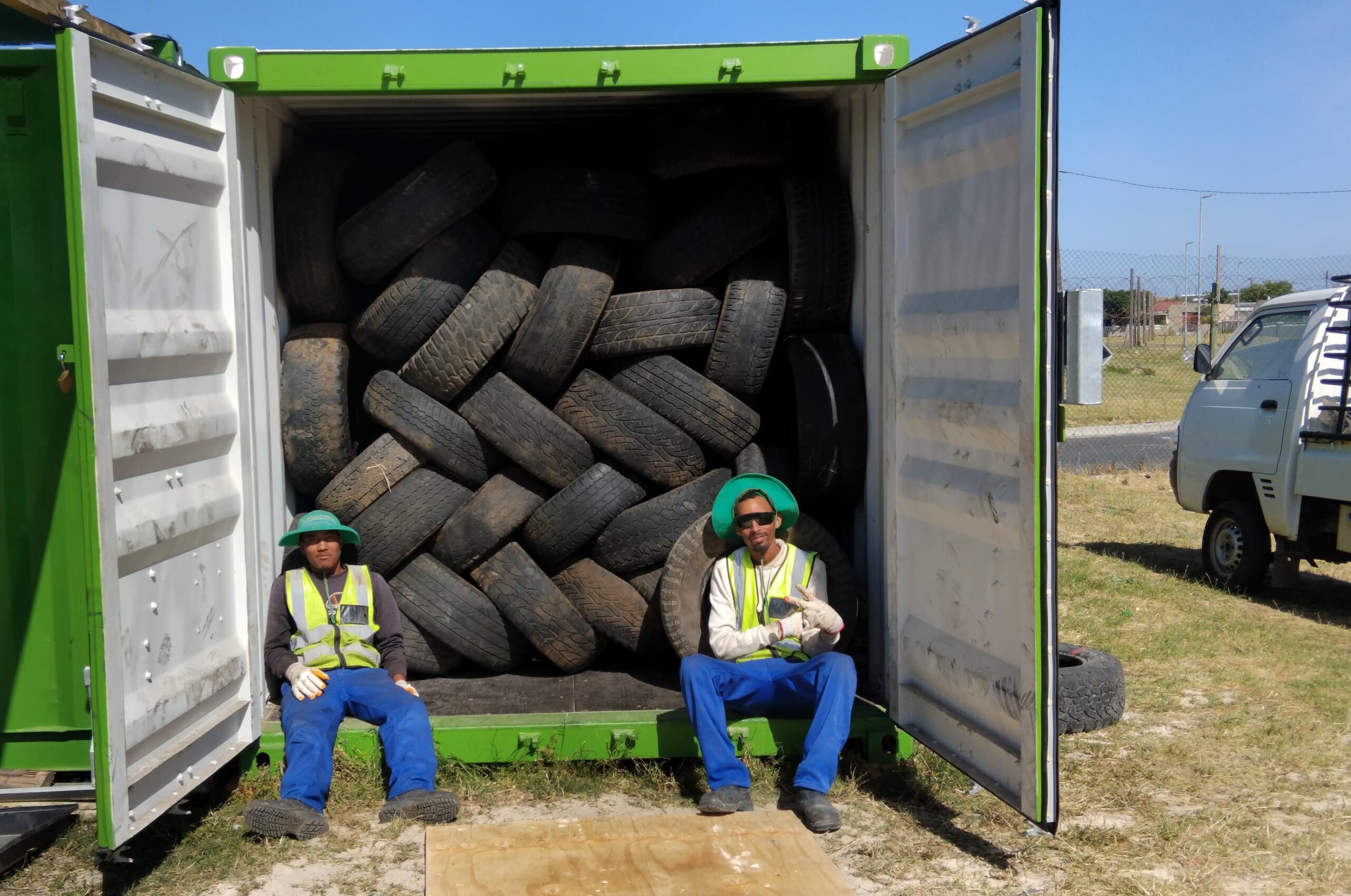
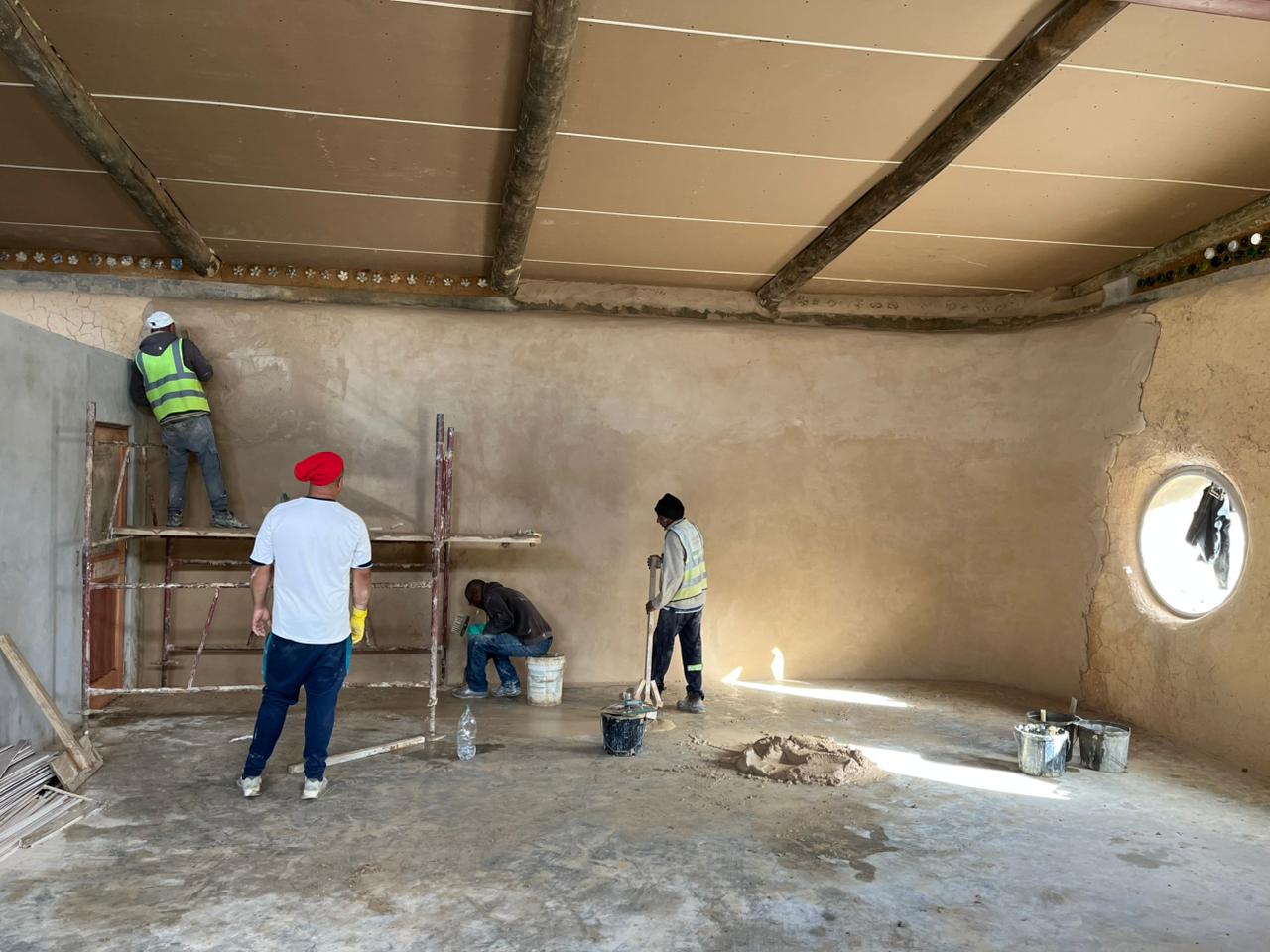
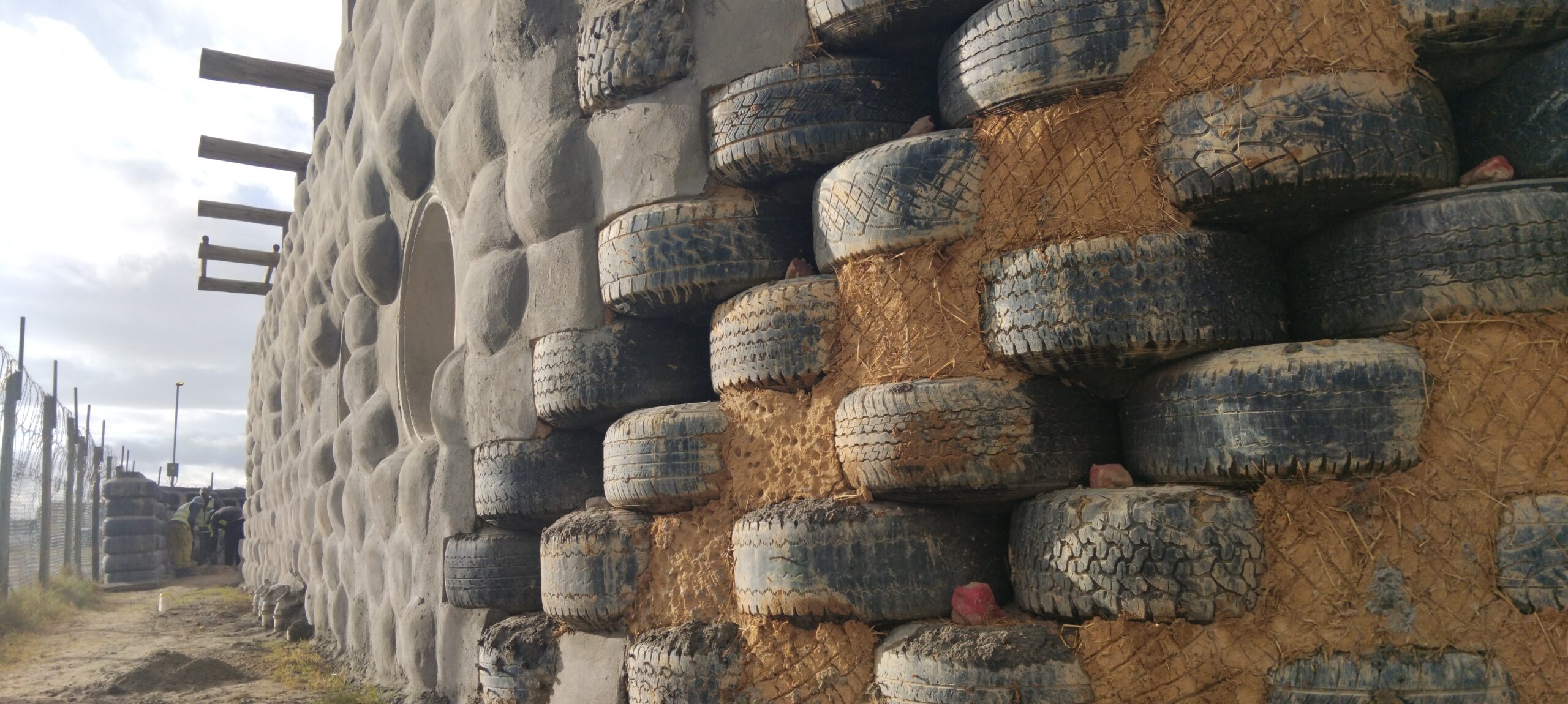
Our approach combines recovered and recycled materials, including tyres, ecobricks, recycled clay‑fired bricks, glass bottle bricks, and construction rubble (tyre‑fill), with natural building elements such as earth‑based plasters and passive solar design. The plaster system itself is deliberately robust, applied in successive layers (a minimum of 60 mm overall, with a 30 mm scratch coat, 10 mm form coat, and a 20 mm final lime finish) to ensure durability and comfort. This results in a hybrid system shaped by material availability and project requirements.
With regard to tyre availability, in South Africa, a recycling fee is paid when purchasing a tyre. These tyres are then channelled into depots managed by the Waste Bureau, and registered tyre‑recyclers can access them free of charge.
There are also performance considerations. A rammed‑earth tyre wall of approximately 900 mm thickness provides substantial thermal mass, which can moderate internal temperature fluctuations and reduce reliance on mechanical heating and cooling. Each side carries 60 mm of plaster, 120 mm in total, with the tyre cavity packed with recycled building rubble. The rubber wall itself is only a thin fraction of the assembly. For children coming from township homes that are freezing in winter and sweltering in summer, that thermal comfort matters enormously.
But won’t the tyres off-gas into the soil? What about leaching?
This concern relates to a different pathway, namely the potential for chemicals to leach from tyres into surrounding soil or groundwater rather than into indoor air.
The leaching question is most relevant when tyres are shredded and used in open, water-permeable applications, such as crumb rubber on playing fields, where water passes through the material repeatedly. In that context, the issue has received significant research attention. A multi-year Federal Research Action Plan led by the US EPA, in partnership with the CDC and the Agency for Toxic Substances and Disease Registry, ran from 2016 to 2024 to investigate potential health implications of recycled tyre crumb [4].
In a tyre-wall assembly, the conditions are different. The tyres are used intact rather than shredded, are densely packed with earth, and are fully encased in plaster. The water doesn’t pass through the tyres.
Site conditions are also relevant. The soils of the Cape Flats are predominantly sandy and free-draining, which limits prolonged water retention around the structure. In this context, the tyre elements are not embedded in persistently wet conditions that would encourage ongoing water movement through the material.
Taken together, intact tyres, encapsulation within the wall assembly, limited direct water exposure, and well-drained soil conditions mean that the pathways associated with leaching are constrained.
You proved fire resistance in a lab. Does that reflect real-world conditions?
It’s a good question, and the test engineers anticipated it.
The test was conducted under EN 1364-1, which applies to non-loadbearing walls, as no structural load was applied during testing. The wall designed for the Heideveld Edu-Hub is load-bearing. In this case, more than half of the 900 mm wall thickness remained unaffected after 121 minutes of fire exposure. The test engineers noted that, given this reserve of mass and integrity, load-bearing capacity could reasonably be expected to be maintained under fire conditions.
Temperature data from the test illustrates the behaviour of the wall. The furnace reached 576°C within five minutes and 1,049°C at 120 minutes. Over the full duration of the test, the unexposed face of the wall did not exceed 26°C. This is well below the allowable average of 171°C and maximum of 211°C defined by the standard. The wall’s thermal mass absorbed a substantial amount of energy while limiting heat transfer to the opposite side.
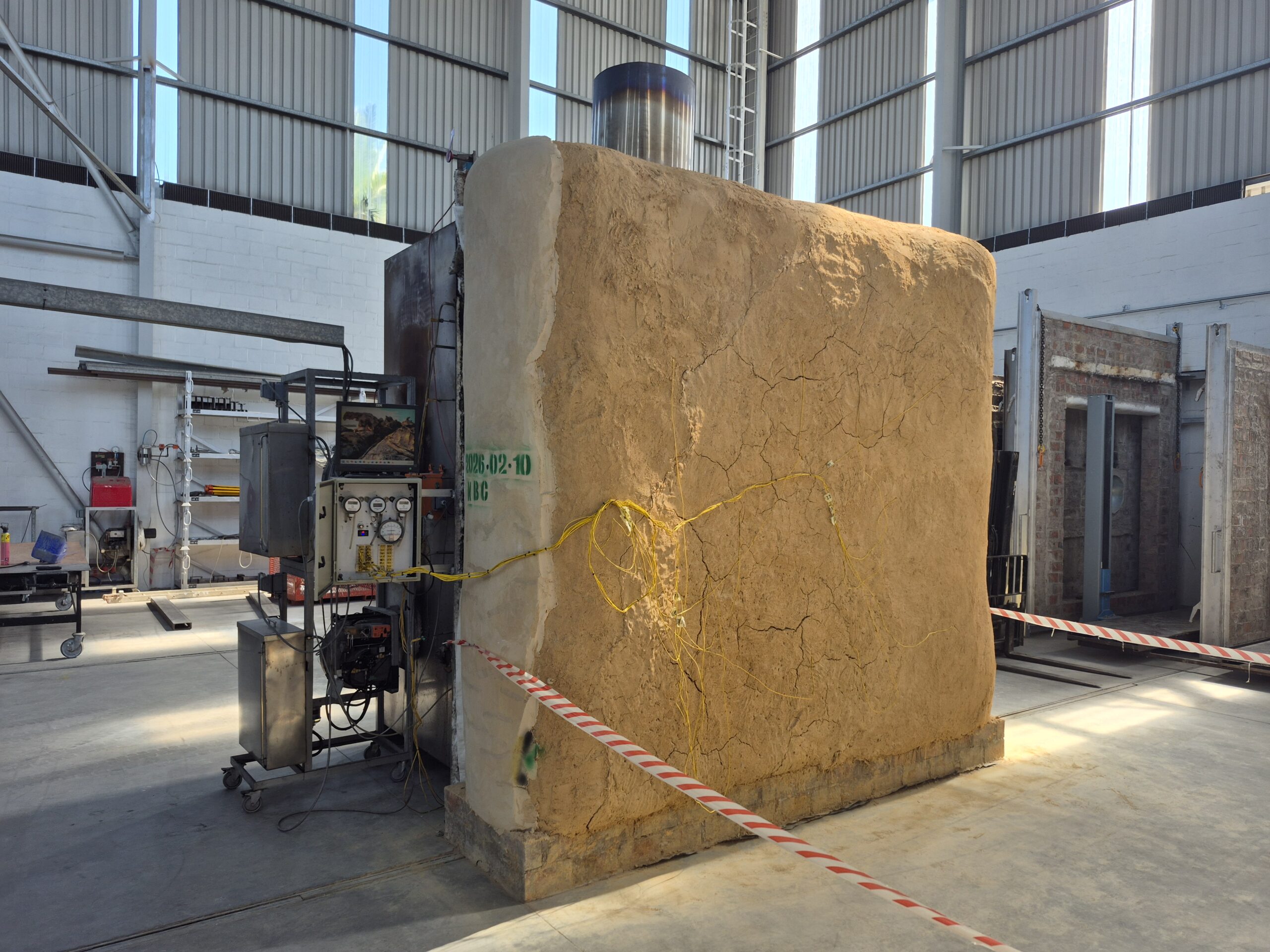
Observations during the test included expected material responses under high thermal load. The lime plaster exhibited cracking, and limited areas of tyre material became exposed within the furnace during later stages of the test.
These conditions did not result in loss of integrity, insulation or stability of the wall assembly, which maintained its performance for the full duration of the test.
For projects seeking to rely on this test result for planning or building consent, confirmation with a structural engineer is recommended to ensure that the tested assembly corresponds to the specific design.
What are the thermal performance properties of a tyre wall?
The fire test was conducted to determine fire resistance and was not designed to test U-values or R-values. There is no published U-value for a rammed-earth tyre wall as a specific assembly. However, a tyre wall rammed with earth behaves thermally like a rammed earth wall of equivalent thickness, so published U-value data for rammed earth is a reasonable guide.
U-values and R-values describe how heat moves through a building element. A U-value measures how quickly heat passes through a wall, roof or window, while an R-value measures how strongly a material resists heat flow. They describe the same behaviour from opposite perspectives, with lower U-values and higher R-values indicating better insulation.
The thermal performance of these walls is primarily based on thermal mass rather than insulation. These are distinct properties. Insulation reduces the rate of heat transfer, while thermal mass absorbs and releases heat over time, moderating temperature fluctuations.
A conventional strawbale wall provides high insulation. A rammed-earth tyre wall of approximately 900 mm thickness provides high thermal mass. This results in slower heat gain and loss, contributing to more stable internal temperatures over daily and seasonal cycles.
The effectiveness of this approach depends on climate conditions. In Cape Town’s Mediterranean climate, characterised by warm, dry summers and mild, wetter winters, thermal mass combined with passive solar design can support stable indoor conditions without additional heating or cooling.
In colder or more humid climates, the same strategy may perform differently, and additional insulation or alternative design approaches may be appropriate.
Isn’t tyre-wall construction extremely labour intensive?
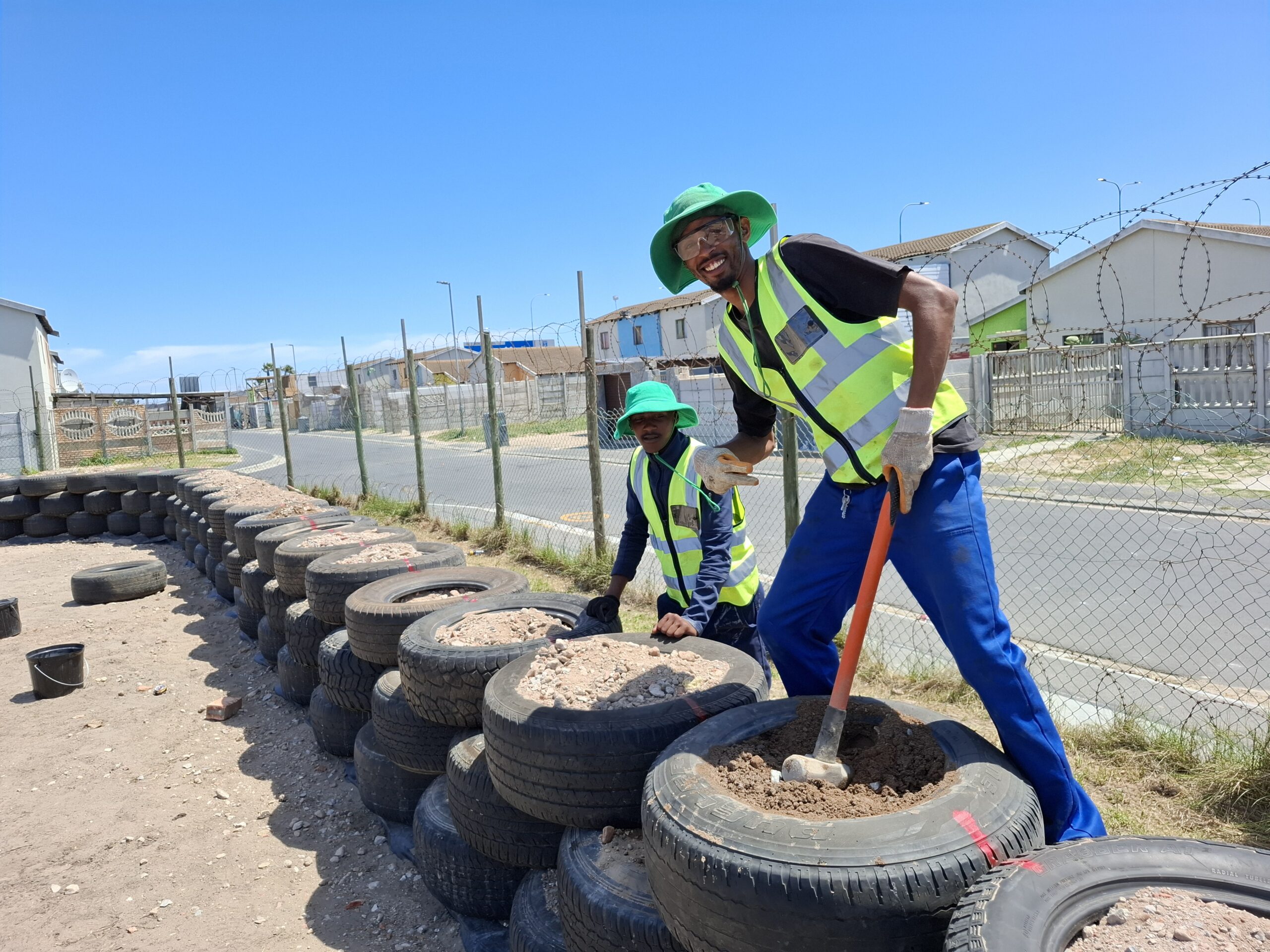
Yes, tyre-wall construction is labour intensive. Compacting earth into tyres to the required density requires time and sustained physical effort.
In this context, that labour requirement has specific implications. Building with local labour keeps much of the project’s embodied energy in the community. It translates into wages paid locally, skills developed and retained, and a building process that involves direct participation from people in the area.
By comparison, more conventional construction methods often concentrate value in manufactured materials and supply chains, with a larger share of project costs allocated to production, transport and external suppliers.
Labour intensity can also support skills development. Participation in the build process provides experience in construction techniques that can be applied in future projects, contributing to local capacity over time. From our perspective, the “problem” of labour intensity is really an opportunity to build capacity.
A note on where we’re building, and why it matters
In response to publishing the fire test results, some natural building purists have asked why we use this approach instead of other natural methods. We’ve addressed the practical side of that above, but there’s a bigger picture worth talking about directly. These questions usually come from people who have built small natural homes on single sites rich in suitable soils, without understanding our broader context of building large‑scale public projects in underserved communities where resources are scarce and suitable building sand is limited.
In the Cape Town area, a 2017 estimate placed the number of children younger than seven not attending an early childhood development centre at about 18,000 [5]. Nationally, around 1.15 million children aged three to five are not enrolled in any early learning programme [6]. Without early childhood education, children are more vulnerable to harm and enter formal schooling without foundational support. Research shows that early environments have lasting effects on learning, health, and long‑term opportunity.
We build public schools and ECD centres in communities that need them, using materials that are available, affordable, durable, and capable of long‑term performance, and as sustainable as context allows. We work with local labour so that construction value stays in the community and builds skills over time. Every decision about materials and techniques is made within these constraints, with the goal of creating spaces that are beautiful, healthy, thermally comfortable, and built to last, in places where those qualities are rare and where they genuinely change lives.

Building with intention
Tyre-wall construction is not a perfect solution, but few building systems are. When considered alongside evidence on off-gassing and leaching, performance characteristics, the value of material reuse, community employment, and the need for durable infrastructure in places like Heideveld, it represents a viable and considered approach. The fire test provides a formal, independently verified result within that broader body of knowledge that has long been argued from first principles.
We build in communities where resources are scarce, materials are limited, and the need is real and pressing. Our approach is grounded in resource-conscious design and a hybrid use of materials. It combines recovered materials with natural building techniques, passive solar design, and thick earth plasters. It is not a compromise between ideals and reality, but a response shaped by the conditions.
The fire test contributes to that discussion by providing a formal reference point, but it sits alongside a broader set of considerations that shape how and where this approach is used. This forms part of our broader mission to advance the cause of sustainable building and effort to develop and demonstrate building systems that are grounded in available materials, supported by evidence, and capable of being applied within formal planning frameworks.
Within those conditions, our approach reflects a considered response to both material realities and human need.
References
- Piccinno, F. et al. (2022). ‘End-of-life options of tyres: A review.’ Resources, Conservation and Recycling Advances, ScienceDirect. https://www.sciencedirect.com/science/article/pii/S2542504822000392
- University of Wisconsin-Madison (1995). Use of Scrap Tires in Civil and Environmental Construction. Environmental Geotechnics Report No. 95-2. Geotechnical Engineering Program, Department of Civil and Environmental Engineering, University of Wisconsin-Madison.
- Earthship Biotecture (2020). ‘Tire Off-gassing Report — Non-Issue.’ Reproduces cover letter from the New Mexico Environment Department and key excerpts from the University of Wisconsin-Madison report. https://earthship.com/2020/06/15/tire-offgassing-report-non-issue/
- US Environmental Protection Agency (2016–2024). ‘Federal Research Action Plan on Recycled Tire Crumb Used in Playing Fields and Playgrounds.’ Conducted in partnership with the CDC, ATSDR, and CPSC. https://www.epa.gov/research-states/epa-research-partner-support-story-synthetic-turf-field-study
- Lake, L. (2017). Cited in: Natural Building Collective, ‘Ulwazi Educare: South Africa’s largest tyre building.’ https://www.naturalbuildingcollective.com/ulwazi-educare/
- Ilifa Labantwana / Children’s Institute, UCT (2024). South African Early Childhood Review 2024. https://ilifalabantwana.co.za/sa-early-childhood-review-2024-press-release-2/